There’ll be days when you’re on high-beam joy. Shine on, unapologetically.
But if you’re human, there’ll also be days when your light dims a little…when the weight of your own worries feels heavy, or you know someone else is walking through a difficult season.
You can still shine on those days. Just a little softer. A little quieter. And that’s perfectly all right. Sometimes, a softer light is the most inviting of all.
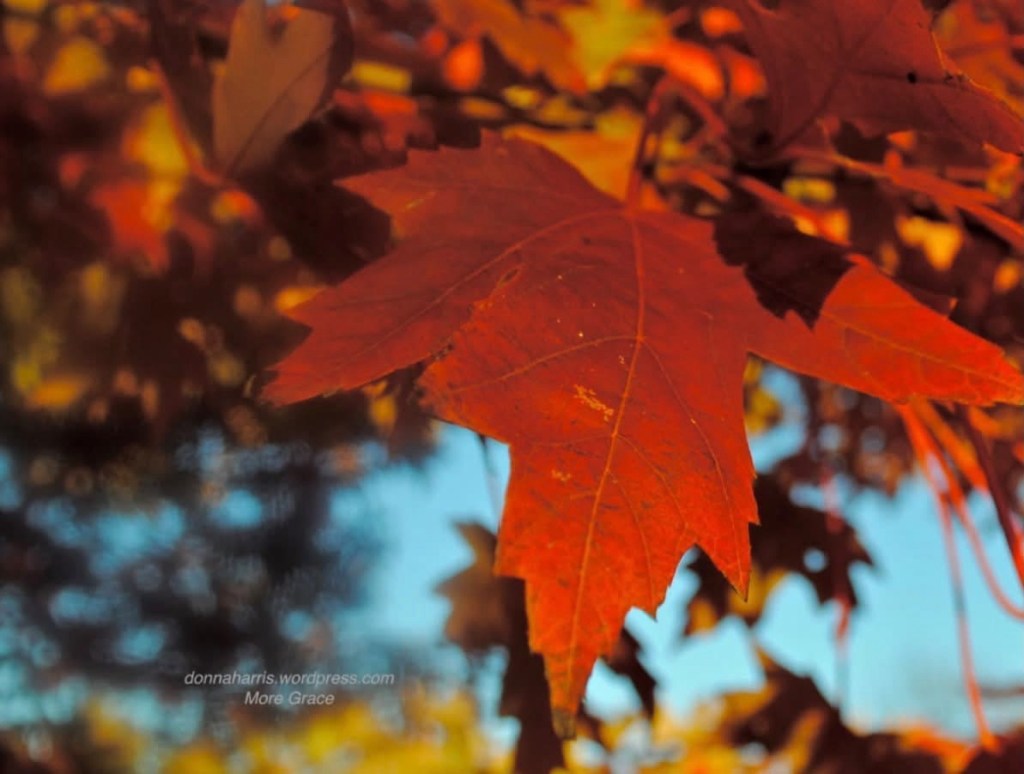
Like a cold fall day, when the leaves turn brilliant shades of gold, lavender and red, there’s beauty in the changing, the fading, and the letting go.
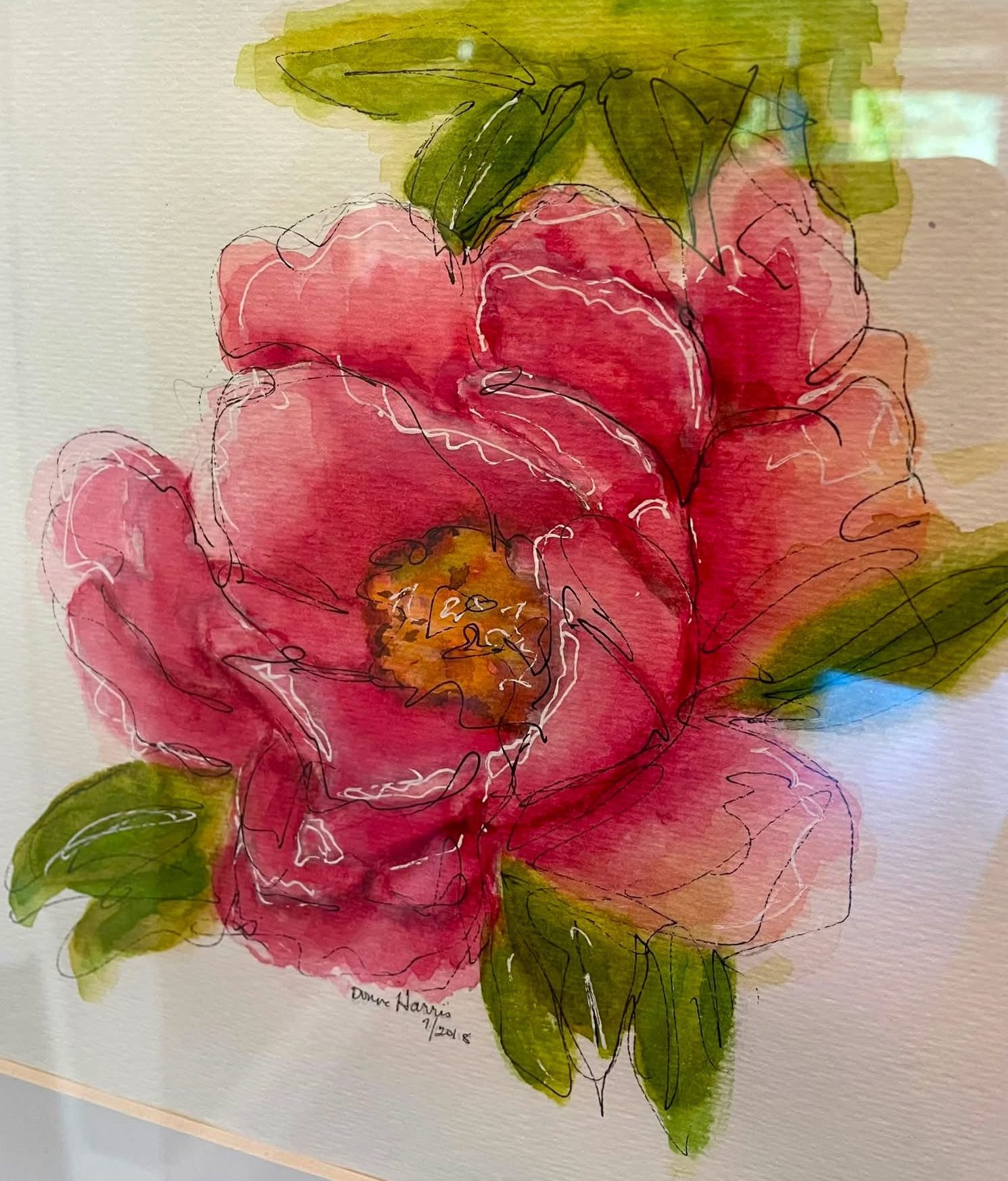
“Take the very hardest thing in your life…the place of difficulty, outward or inward, and expect God to triumph gloriously in that very spot. Just there, He can bring your soul into blossom.” — Lilias Trotter
Most of us have a quiet theology of relocation. We believe, somewhere beneath the surface, that God’s best work happens after the hard thing…once the diagnosis clears, the relationship heals, the job comes through, the season passes. We picture flourishing as something waiting for us on the other side of difficulty, like a reward for having endured it.
Lilias Trotter offers a different picture entirely. Not eventually. Just there. Notice what she doesn’t say. She doesn’t say God will eventually move you somewhere easier and then cause you to flourish. She says: expect Him to triumph in that very spot. The exact place of your difficulty…not the place after… it is where the deepest work happens.
This is a strange kind of hope, because it asks nothing of our circumstances changing. It locates the miracle inside the hard thing, not on the far side of it. The pain isn’t merely the price of admission to something better later; it can be the very ground where blossoming occurs.
Trotter is also careful to say “outward or inward.” We tend to reserve the word suffering for outward, visible things…illness, loss, financial strain, conflict. But she includes the inward places too, the ones we’re often ashamed to name:
• A relationship that quietly wounds you
• Grief that hasn’t finished its work
• A habit or pattern you’ve tried and failed to break more times than you can count
• Fear that shadows ordinary decisions
• Doubt that won’t resolve into certainty
• Resentment you can’t seem to release
• Shame that outlives the thing that caused it
• A silence from God that feels less like peace and more like absence
None of these show up on a hospital chart or a bank statement, but they are every bit as real as the outward difficulties, and every bit as eligible for this promise. God’s triumph isn’t reserved for the visible battles.
There is also the audacity of “expect”…The word that does the heaviest lifting in this quote is expect. Not hope, wish, or pray for…expect. Expectation carries weight; it leans forward. To expect God to triumph gloriously in your hardest place is to make a quiet declaration against despair…before there’s any visible evidence to support it.
This is not naive optimism. Trotter herself gave her life to serving among people in desperate circumstances in North Africa; she wasn’t a stranger to hardship or slow, hidden work. Her expectation was forged in exactly the kind of difficulty she’s describing, not in the absence of it.
More than just survival…not that we would endure the hard place, not that we’d merely get through it intact, but that our soul would come into blossom there.
Blossoming is not neutral; it’s abundant, unhurried, and unmistakably alive. It’s the language of beauty, not just resilience.
This is the deeper claim underneath the whole quote: that God doesn’t simply rescue us from our hardest places. He can make something beautiful of them. Beauty from ashes, as Isaiah puts it…not beauty instead of ashes, but beauty rising out of the very ashes themselves.
So if there’s a place in your life right now…outward or inward…that feels most like barren ground, Trotter’s words are an invitation rather than a diagnosis. Not: endure this until it ends. But: expect God here. In this. Right where you are.
There is always more grace in the very place of difficulty than we tend to believe. And sometimes the hardest place in our lives isn’t standing between us and the blossoming…it is the ground it’s growing in.
“I rejoice at your word like one who finds great spoil.”
Great spoil. Hidden treasure. Something worth searching for, digging toward, and uncovering.
Learning to treasure God’s Word requires a fight. Busy schedules crowd it out, distracted minds wander, stubborn hearts resist, and a loud world presses its own standards into us. We can know the Bible is precious and still find ourselves too tired or pre-occupied to open it.
Perhaps that is why Scripture feels less like a shallow stream and more like a deep mine. The treasure is real, but we have to dig.
We must dig past the noise, past our assumptions, and past our self-sufficiency. We have to slow down long enough to listen. When we do, we uncover something transformative: a word that meets us right where we are, a truth that exposes what needs changing, a promise that steadies us, and a glimpse of God’s character that results in worship.
The treasure wasn’t created the moment we found it…it was there all along. The digging simply revealed what was hidden beneath the surface.
To truly treasure God’s Word is not merely to read it, but to linger long enough for it to read us…letting it sink below the surface until it becomes a part of who we are.
When the psalmist proclaims, “I love your commandments above gold, above fine gold,” he describes a love that doesn’t happen by accident. It is cultivated…There is treasure buried deep in the Word. Keep digging.
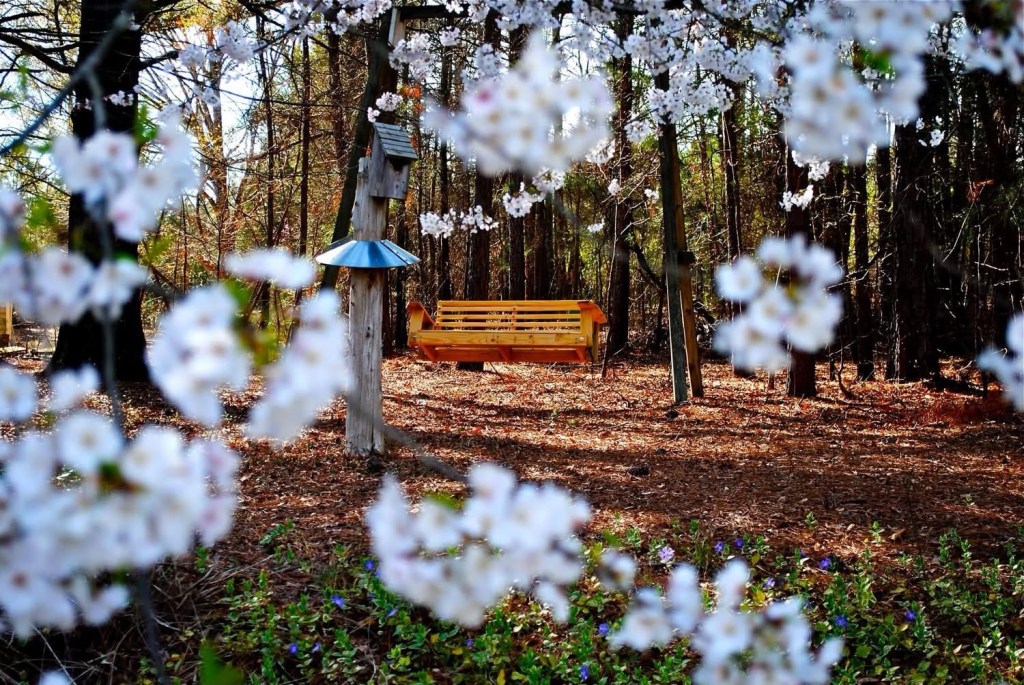
My parents’ swing has always been more than a place to sit. It holds a lifetime of memories.
My dad loved watching my mom read books in the shade while they gently swayed together. In the evenings, they would sit side by side, sipping sweet iced tea and talking about the day. Whenever friends and family came to visit, someone always hurried to claim the swing first. Folding chairs were carried out from the garage and arranged in a half-circle facing the swing. It became the gathering place where stories were shared, laughter lingered, and ordinary days became treasured memories.
There always seemed to be a wooden swing in our backyard or hanging from the back porch. Pillows made it cozy enough for an afternoon nap. My dad would tie a long rope to a nearby tree branch or sometimes to the corner of the porch, so it reached the swing. They would stretch out together, give the rope a gentle tug, and let its steady rhythm rock them to sleep.
Then life changed.
After my mom was gone, the swing became painfully quiet. The easy conversations that once surrounded it had ended because she was no longer there to share them. My dad never noticed how weathered the swing had become or how badly the paint had chipped until after she was gone. Somehow, he noticed the swing even more as the memories slowly began to fade.
Determined to hold on to those memories, my dad bought lumber and built a new swing, carefully modeling it after the original one he had made for my mom many years before. He built birdhouses nearby because she had always loved watching the birds. I can only imagine how delighted she would have been and how proud she would have been of his craftsmanship.
After my father died, the swing held a special place in my heart. Before we sold their house, I would often sit there, gently rocking, and the memories would come. I could almost hear their laughter, see my mom reading in the shade, and watch my dad give the rope one more tug as they swayed together.
The swing is gone now, but what it held is not. Love has a way of outliving wood, weather, and even memory itself. Some things are never really lost. They are simply held for us until, by grace, they return.
“…One thing I do know, that though I was blind, now I see.” John 9:25
There are seasons when we do not drift into darkness — we spiral.
Grief collides with exhaustion. Pride masks pain. We answer, “I’m fine,” when we are unraveling. We reach for something immediate to numb what feels unbearable. A glass. A distraction. Another performance of being “okay.”
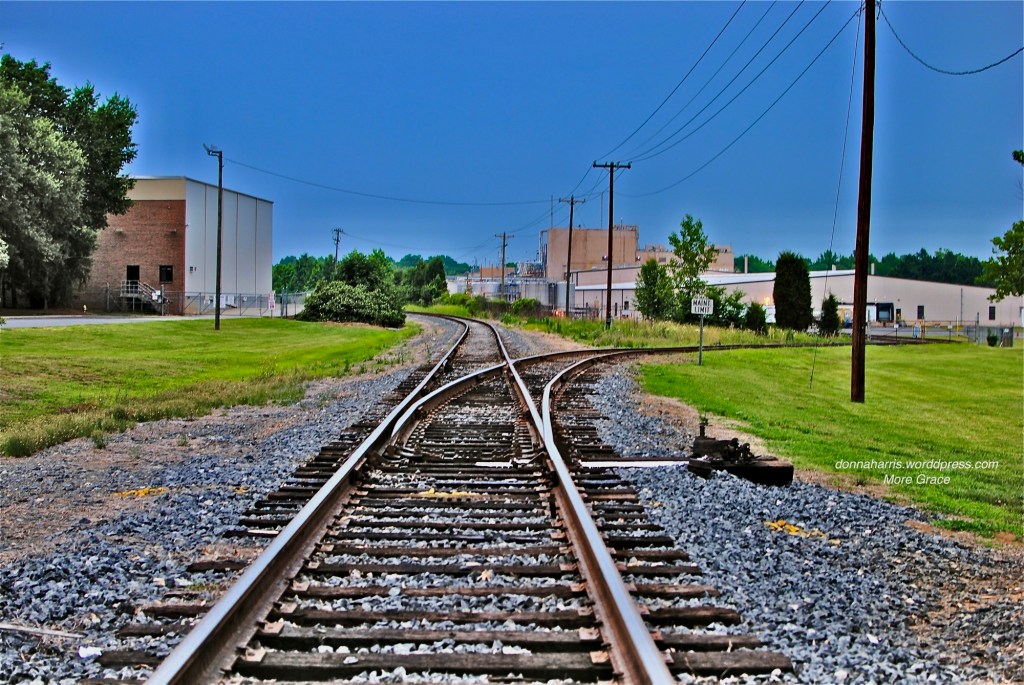
And all the while, the red lights at the railroad crossing, are flashing.
On March 1, 2010, I drove into a storm — both literal and spiritual. My mother was dying of pancreatic cancer. My father was angry at God. I was depleted from caregiving, working two jobs, and holding myself together for everyone else.
That night I crossed railroad tracks I had driven over hundreds of times before.
This time, a train was coming. The red flashing lights happened quickly. The crossing bar did not come down. Immediately, I was on the tracks.
I turned my head toward the right as the train barreled around the curve..immense light engulfing me behind the wheel. I screamed. I heard the blaring whistle and the screeching wheels. Visions flashed as I thought of my husband and children…our daughter pregnant with our first grandchild.
I expected to die.
And then — I was across, as though I was pushed over the tracks. I looked in the rear view mirror as the train screeched by.
I still cannot explain the mechanics of what happened. But I know what I heard immediately as the train passed…my name!
“Donna!”
God called my name. As a shepherd knows the name of His sheep.
In that moment, I realized something I had forgotten in my grief: He was not absent from the storm. He was in it. He had been in it all along.
The near collision exposed what I had been hiding — exhaustion, pride, and self-medicating disguised as coping. I was thirsting for something other than Christ.
That night I lay face down on my living room floor and surrendered. I opened my Bible and read:
“As the deer pants for streams of water, so my soul pants for you, my God…”
I was thirsty — but for the wrong well.
The train did not destroy me. It awakened me.
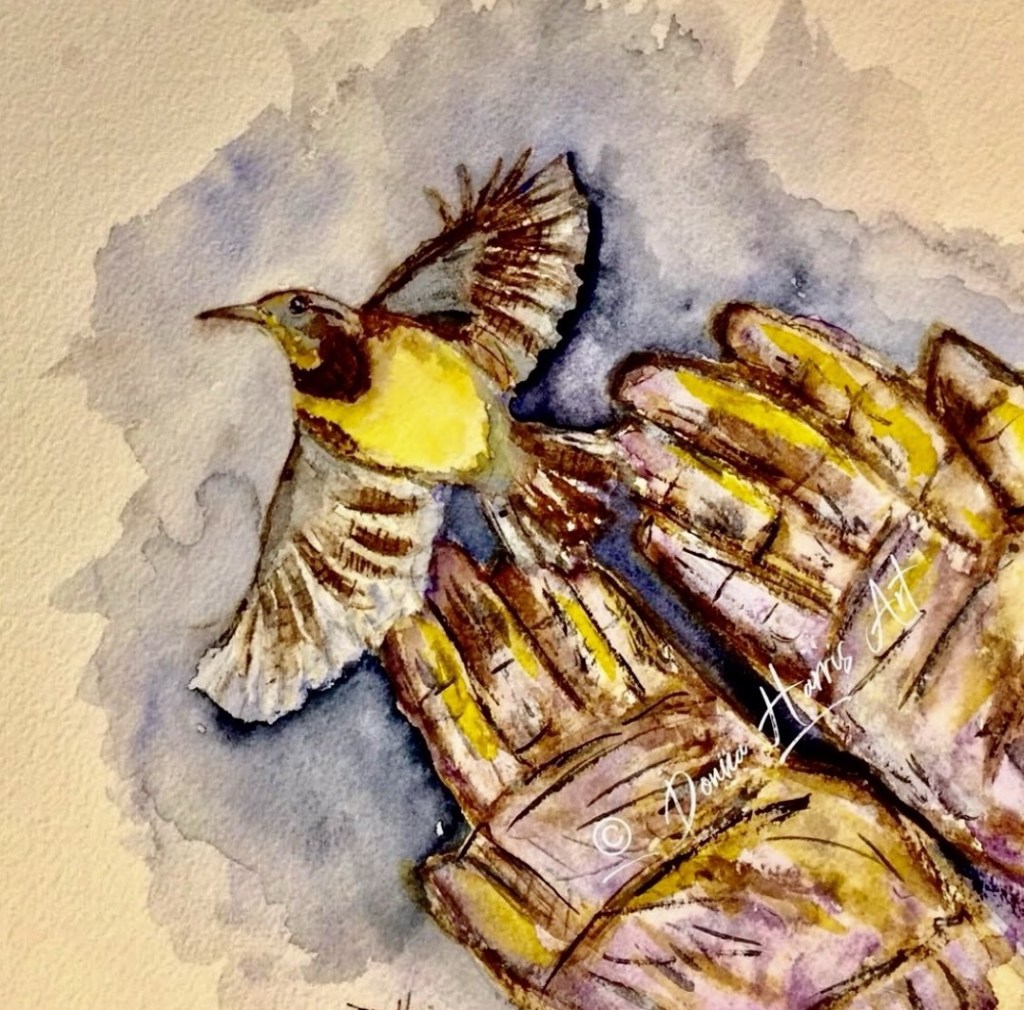
Healing did not happen overnight. Trauma lingered. Shame whispered. But grace kept pursuing. Through Scripture. Through prayer. Through friends who “hemmed me in.” Through art that pulled beauty from ashes.
James writes, “He gives more grace.”
More grace for grief. More grace for pride. More grace for addiction. More grace for those who almost didn’t make it across the tracks.
Perhaps your storm looks different. Perhaps your train is not steel and headlights but burnout, resentment, secret habits, or silent despair.
And if you listen closely, you may hear your name spoken in the dark.
The Light still shines there. And the darkness has not overcome it.
————
A personal note:
I share this story with trembling hands and deep gratitude.
For ten years I carried the “train story” quietly, ashamed that someone who loved Jesus could spiral into such exhaustion and unhealthy coping. Pride kept me silent far longer than pain did.
But I have learned that secrecy feeds shame, and shame withers in the presence of grace.
This is not a story about my strength. It is a story about God’s relentless pursuit. About a Shepherd who calls His sheep by name. About a Savior who meets us not after we fix ourselves — but in the storm, on the tracks, at the edge.
If you find yourself weary, hiding, or pretending you are fine, I pray this encourages you to step into the light. Ask for help. Speak the truth. Surrender again.
Our God Who Goes Before… Before you take a step, God is already there. “I am sending an angel ahead of you…” (Exodus 23:20)
Before you know how you will respond. Before you know if you will be strong or steady. Before you know if you will get it right.
God goes ahead of you.
He tells His people to pay careful attention, to listen, to obey—not because He is demanding perfection, but because He loves us. He knows what lies ahead. He knows what will try to harm, distract, and wear us down. And He promises, I will deal with what stands against you.
This is God’s grace and favor…”I will send my terror before you….” (Exodus 23:27)
God isn’t just behind you; He is ahead of you. This “terror” isn’t about cruelty; it’s about a presence so holy and powerful that obstacles naturally give way.
Then He says something that settles your anxious heart: “Little by little, I will drive them out before you.” (Exodus 23:30)
Not all at once. Not overnight. Little by little.
“Little by little” ensures that your roots go deep before your branches get high. It’s the difference between a flash flood and a steady rain; one destroys the soil, while the other nourishes it.
Then we arrive In Exodus 24:7…The day we swear we’ll change, the hour we promise obedience, the moment we say, “All the Lord has spoken, we will do.”
And we mean it. I recognize myself in that promise. I want to choose the right way…and I also know how often I fall short. That’s why God says He works “little by little.”
Slow is not rejection. Slow is mercy.
Our hope isn’t in perfect follow-through. It’s in a God who goes before us to clear the way and stays behind us to cover our stumbles.
“Digging Until the Water Flows” —my thoughts about persistence—a pattern in the lives of the Patriarchs, specifically Isaac and Jacob, where the act of digging a well becomes a physical manifestation of faith, persistence, and divine provision.
Scripture is full of ordinary acts that carry extraordinary meaning. Digging a well is one of them. In the ancient world, a well was not simply a convenience—it was survival. To dig a well was to stake a claim that life could flourish there. When we read about Isaac reopening his father Abraham’s wells and digging new ones in Genesis 26, we’re not just reading history; we’re being invited into a pattern of faith.
Isaac’s story is striking in its repetition. He digs. The Philistines quarrel. The well is named Esek—Contention. He digs again. More opposition. Sitnah—Enmity.
Nothing changes on the surface. No applause. No breakthrough. Just more dirt and more resistance. Yet Isaac keeps digging. And eventually, he comes to a place he names Rehoboth—Room. Space. Breathing room. A place where he can say, “Now the Lord has made room for us, and we shall be fruitful in the land.”
Here is the quiet wisdom: opposition does not always mean you’re off course. Sometimes it means you are close to water.
We often assume that God’s will feels smooth, obvious, and uninterrupted. But Scripture paints a different picture. God’s provision is certain, yet the path to it is frequently marked by perseverance.
Isaac doesn’t argue. He doesn’t retaliate. He doesn’t abandon the land. He digs another well. Over and over.
This is a picture of active faith.
We speak often of Christ as Living Water, and rightly so. But living water is not always experienced passively. God supplies the water; we are invited to pick up the shovel. Seeking Christ is not wishful thinking—it is intentional pursuit. It means creating space in crowded lives. It means removing what blocks access: distraction, bitterness, fear, self-reliance, and exhaustion.
Digging is work.
Prayer can feel repetitive. Scripture reading can feel dry. Obedience can feel costly. Yet beneath that soil, God has already placed a source. The labor is not to create water, but to reach it.
When Jesus meets the woman at Jacob’s well in John 4, He stands at a site shaped by generations of digging. That physical well becomes a doorway to a deeper promise: “Whoever drinks of the water that I will give him will never be thirsty again.” Christ does not eliminate thirst; He fulfills it. He does not remove the need for seeking; He becomes the treasure sought.
Like the deer in Psalm 42, we do not merely wish for streams—we search for them.
Trials often feel like sabotage. Joy gets clogged. Peace slows to a trickle. But Scripture reframes these moments. The enemy may throw dirt, but God uses the digging. What feels like obstruction can become an invitation: pick up the shovel again.
Esek and Sitnah come before Rehoboth.
Contention and hostility often precede expansion.
Before God makes room, He strengthens resolve.
This means your persistence matters.
Not because God is reluctant, but because persistence forms you. Each time you dig, your roots go deeper. Each time you pray anyway, you become more aware of your dependence. Each time you seek Christ in silence, you discover that He has been present all along.
The goal is not simply relief.
The goal is communion.
So if today feels dry, don’t assume God has moved. Dig another well.
As a year draws to a close, nostalgia has a way of arriving quietly…the ordinary moments that mattered: conversations that shaped us, books and images that lingered, questions of faith and beauty, the steady work of making and reflecting.
We often carried both grief and joy before God. Some days were heavy, others quietly radiant, and all of them were held in His presence. We trust that nothing was wasted…every sorrow and every grace held with open hands.
We can be thankful for friendships where God met us with shared laughter, rich conversations, a community enfolding the grief and joy. We can be thankful for family…to be surrounded by the ones we love.
Nostalgia is time that doesn’t disappear; it gathers. The year becomes part of you—woven into your seeing, your believing, your creating…all for the glory of God.